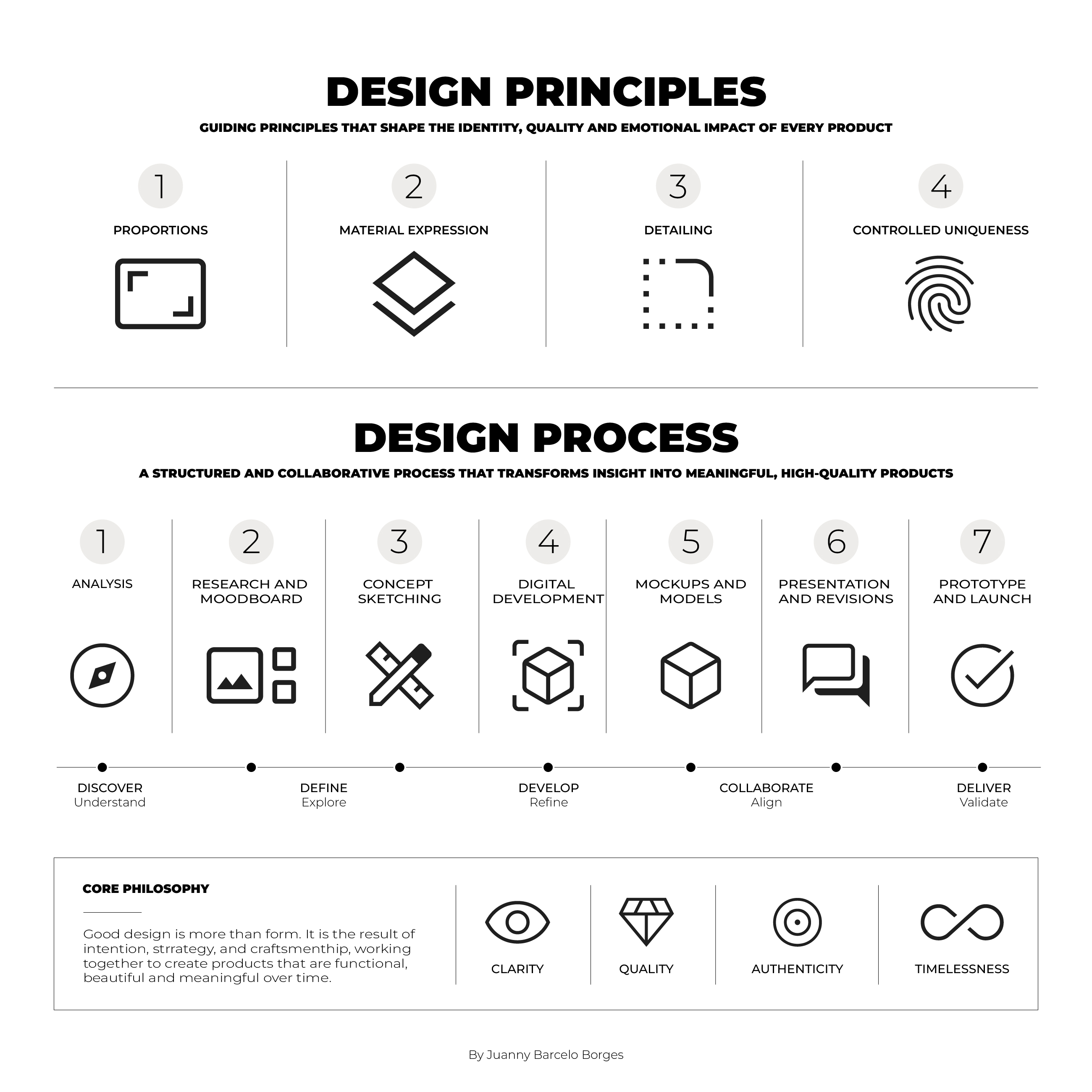
Design Principles
Guiding principles that shape the identity, quality, and emotional impact of every product.
1. Proportions
The balance between curves, lines, and volumes defines the visual architecture and presence of a product.
2. Material expression
Materials are combined in a refined and intentional way to enhance the emotions and character they naturally convey.
3. Detailing
Exceptional products are defined through beautifully executed details and precision in transitions, joints, and edges.
4. Controlled Uniqueness
Each product incorporates a distinctive gesture that creates identity, personality, impact, and memorability.
Design Process
A structured and collaborative process that transforms insight into meaningful, high-quality products.
1. Analysis
The process begins with understanding the brand, its values, positioning, and objectives through strategic dialogue and analysis.
2. Research and Moodboard
Collected insights are translated into visual references and moodboards to define a clear aesthetic direction and avoid misalignment during development.
3. Concept Sketching
Ideas are explored through sketches to identify forms, visual language, and narratives aligned with the intended perception of the product.
4. Digital Development
Selected concepts are refined digitally with increasing attention to proportion, structure, detail, and feasibility.
5. Mockups and Models
Physical studies and mockups are developed to evaluate proportions, ergonomics, and the tangible architecture of the product.
6. Presentation and Revision
Concepts are presented through a transparent and collaborative process focused on refinement, alignment, and continuous improvement.
7. Prototype
The prototype phase validates the final product, allowing refinements before production and launch.